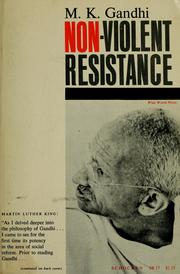
Non-violent resistance (Satyagraha)
Non-violent resistance (Satyagraha)
Mohandas Karamchand Gandhi

Through a collection of excerpts and articles from Gandhiji's publications especially 'Young India', Gandhiji sets forth the theory and application of his satyagraha (clinging to Truth). In the first three sections he explains what satyagraha is and is not; the practices, training, and mindset of the satyagrahi; and the strongest application of satyagraha, c… more
Through a collection of excerpts and articles from Gandhiji's publications especially 'Young India', Gandhiji sets forth the theory and application of his satyagraha (clinging to Truth). In the first three sections he explains what satyagraha is and is not; the practices, training, and mindset of the satyagrahi; and the strongest application of satyagraha, civil disobedience and non-co-operation (previously known as passive resistance). He then charts specific examples of the application of satyagraha such as the effort of the Harijans (untouchables and unapproachables) to receive the same treatment as other non-brahmins. Gandhiji proceeds to elucidate the role of fasting, individual satyagraha, hypothetical and possible applications, and other issues. He concludes by expressing his faith in love, non-violence, and Truth.
Civil-disobedience is the weapon of the strong; it takes strength to be able to leave the cane or the sword. 'One who is free from hatred requires no sword'. This and other works by Gandhiji are essential in the development (whether they agree fully or partly with Gandhiji's teachings) of any civil-resistance movement or non-violent philosophy, whether adopted by an individual or an entire people.
Keep track of this one.
Sign in to log, rate or reviewReviews
No reviews yet
Be the first to say something about it.